MATA Malaysia Meets Tun Dr. Mahathir Mohamad at Perdana Leadership Foundation: A Deep Reflection on National and Global Economic Realities
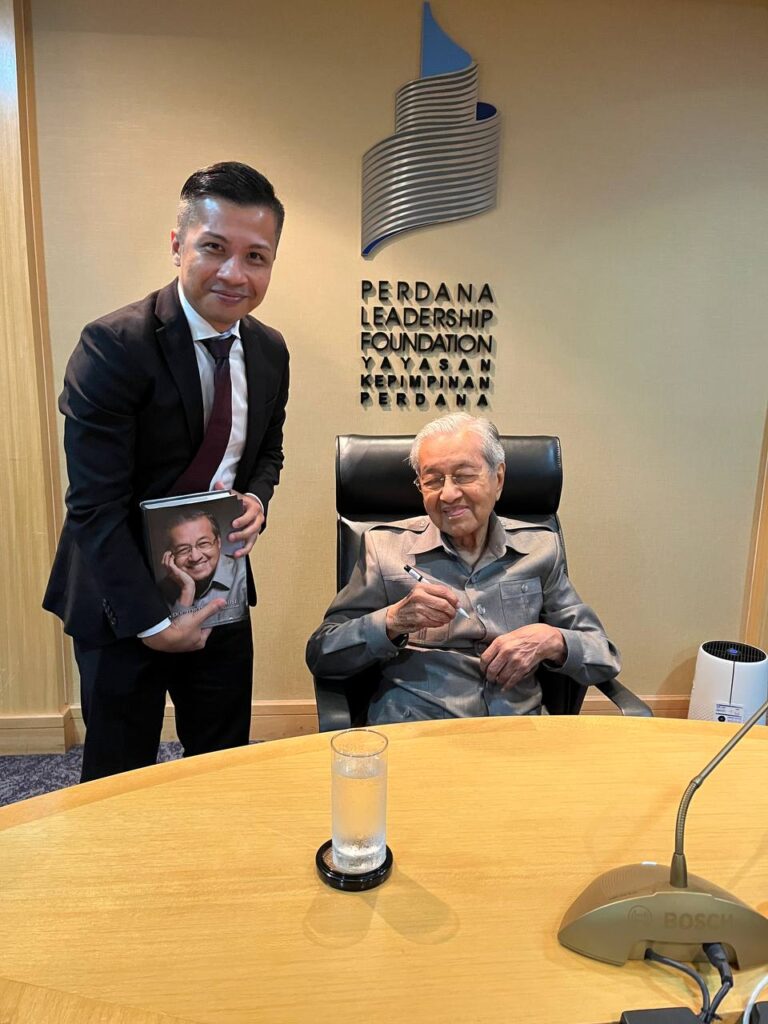
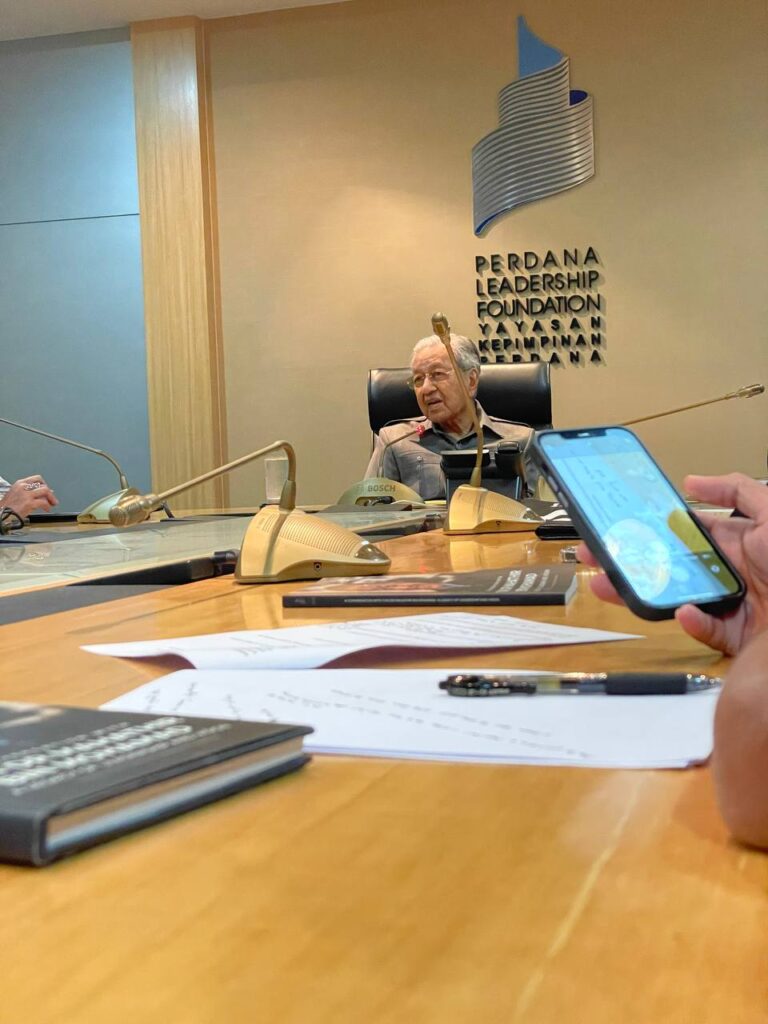
On 21 November 2025, an extraordinary and meaningful engagement took place at the Perdana Leadership Foundation. In the serene, intellectually rich environment of the foundation’s office, MATA Malaysia had the profound honor of being among the organizations invited to meet Tun Dr. Mahathir Mohamad, Malaysia’s most enduring statesman. Representing MATA Malaysia was Secretary-General Mr. Muhammad Azmi Bin Mohd Amin, who carried the association’s vision, analytical spirit, and commitment to national economic progress into the meeting.
Although the schedule of a statesman like Tun Dr. Mahathir remains extraordinarily demanding, he welcomed the session with a calm presence and a mind full of clarity—reflecting once again why he remains one of the most influential thinkers in Malaysia’s modern history. Even as he approaches the remarkable metaphorical milestone of a century of life, his intellectual sharpness continues to inspire countless Malaysians, especially those committed to strengthening the nation’s economic resilience.
A Meeting Filled With Insight and Economic Depth
When MATA Malaysia stepped into the Perdana Leadership Foundation, the expectation was simple: to share perspectives and gain wisdom. Yet the actual experience became far more profound. The discussion evolved into an in-depth reflection on the global economy, Malaysia’s economic structure, sectoral performance, and specific economic conditions currently shaping the nation’s growth trajectory.
Because Tun Dr. Mahathir has spent decades studying, navigating, and influencing Malaysia’s economic destiny, his reflections carried both historical depth and forward-looking clarity. Rather than merely touching on surface trends, he explored a wide spectrum of economic considerations—ranging from global shifts in power to domestic structural realities.
Moreover, he listened intently to the perspectives presented by MATA Malaysia, demonstrating once again that strong leadership always begins with strong curiosity.
Global Economy: A Changing Landscape of Power and Vulnerability
The conversation began with an exploration of global economic dynamics, especially in a world that continues to face volatility, geopolitical realignment, and technological disruption. Tun Dr. Mahathir highlighted how economic cycles increasingly depend on rapid changes in global demand, shifting investment flows, and geopolitical uncertainties that influence everything from energy prices to currency stability.
Because the world is no longer dictated by a single powerhouse, emerging economies—particularly in Asia—are beginning to reshape global markets. Additionally, supply chain restructuring, accelerated by global tensions and economic protectionism, continues to redefine the flow of goods and capital. These shifts, he noted, require countries like Malaysia to anticipate global change rather than simply react to it.
MATA Malaysia echoed this view, emphasizing that technical analysis, market behavior, and economic indicators are now more intertwined than ever. With financial markets responding instantly to geopolitical events, analysts must maintain sharp awareness of global economic triggers.
Malaysia’s Economic Direction: Strengths, Challenges, and Renewal
As the discussion moved toward Malaysia’s economic landscape, the tone deepened. Tun Dr. Mahathir expressed his concerns and hopes regarding national competitiveness, societal progress, and sustainable long-term development.
Even though Malaysia has made significant progress in the past decades, he reminded the delegation that economic resilience requires continuous structural strengthening. Beyond that, productivity, technological adaptation, and policy consistency remain crucial pillars.
While external forces often shape economic fluctuations, internal decisions—ranging from education to governance—define the country’s long-term trajectory. Because Malaysia stands at a crossroads between traditional industries and a fast-evolving digital economy, the need for innovation-driven strategies has become more urgent.
MATA Malaysia offered insights into market reactions, investor sentiment, and economic cycles observed through technical analysis. These viewpoints complemented the broader national vision that Tun Dr. Mahathir has championed throughout his leadership.
Mr. Muhammad Azmi Bin Mohd Amin from MATA Malaysia engages with Tun Dr. Mahathir Mohamad at the Perdana Leadership Foundation, exploring leadership insights and collaboration opportunities.
Sectoral Economy: Where the Opportunities and Pressures Lie
The meeting placed a strong emphasis on the sectoral economy, recognizing that Malaysia’s growth cannot be measured only at macro levels. Each sector carries its own potential, constraints, and relevance to national livelihoods.
Tun Dr. Mahathir examined key areas such as:
Manufacturing and industrial growth
Agriculture and food security
Energy transition and sustainability
Technology-driven sectors
Financial services and capital markets
Small and medium enterprise (SME) development
Because Malaysia’s economic structure remains diverse, sectoral strategies must align with long-term competitiveness. Moreover, each industry demands careful attention to global trends—including automation, digital transformation, and green technology.
MATA Malaysia highlighted how sectoral trends often become visible through market behavior long before they show up in formal economic reports. For instance, investor sentiment, stock performance, and capital flow patterns can signal shifts in sectoral strength.
Consequently, the exchange between Tun Dr. Mahathir and MATA Malaysia blended macroeconomic understanding with analytical precision.
Economies in Specific Conditions: Navigating Uncertainty With Strength
One of the most illuminating segments of the meeting involved discussions on economies under specific conditions—those affected by crises, structural imbalances, or unique external shocks. Tun Dr. Mahathir explained how countries often fall into economic traps not because of limited potential, but because of decisions rooted in short-term thinking.
Moreover, he emphasized the importance of national resilience, fiscal discipline, and the ability to innovate during adversity. Whether dealing with inflationary pressures, currency challenges, or global market turbulence, nations must remain adaptive.
MATA Malaysia contributed by illustrating how technical analysis can detect stress patterns or potential recovery signals within financial markets. Furthermore, technical indicators often reveal investor confidence levels that policy makers might overlook.
Because both macro and micro perspectives were shared, the conversation became a balanced and comprehensive analysis.
A Statesman’s Mind Still Sharp With Vision and Concern
Despite the depth of the topics discussed, what truly moved the delegation was the extraordinary clarity Tun Dr. Mahathir displayed throughout the engagement. Even though he approaches a metaphorical century of life, he continues to articulate his thoughts with analytical precision.
Many in the room felt humbled by his unwavering passion for Malaysia’s future. His questions were sharp. His reflections were grounded. His concern for national well-being was unmistakable.
Although many leaders retire from public discourse after long years of service, Tun Dr. Mahathir remains deeply engaged. In fact, his continued willingness to discuss economic issues proves that he never stopped caring about Malaysia’s future.
Consequently, the session became more than a meeting—it became a reminder of what true national service looks like.
Perdana Leadership Foundation: A Sanctuary of Ideas and Legacy
The setting itself contributed to the significance of the encounter. The Perdana Leadership Foundation is more than an office; it is a repository of historical knowledge, leadership insights, and Malaysia’s political evolution. The quiet ambience, filled with books and archives from various eras, served as a powerful backdrop to the discussion.
Because the foundation exists to preserve and share Malaysia’s leadership heritage, the meeting felt aligned with its core mission. Moreover, it reinforced the importance of documenting national experiences, economic principles, and policy lessons for future generations.
MATA Malaysia recognized the value of such institutions in shaping thought leadership and national direction, especially in times of uncertainty.
Reflections From MATA Malaysia: Gratitude and Continuing Commitment
Following the meeting, MATA Malaysia expressed profound gratitude for the opportunity to engage with Tun Dr. Mahathir. For the association, the encounter was not only an honor but also a learning experience filled with intellectual depth and meaningful guidance.
Mr. Muhammad Azmi, representing MATA Malaysia, articulated the delegation’s appreciation for the statesman’s time, wisdom, and openness to dialogue. Additionally, he highlighted the importance of connecting financial analytical bodies with national thought leaders, particularly when the country faces complex economic challenges.
Because MATA Malaysia continuously promotes financial literacy, technical analysis, and market understanding, the session strengthened its resolve to contribute actively to national economic awareness.
The Importance of Economic Awareness in Modern Malaysia
The meeting reminded all attendees that economic literacy is no longer optional. As global markets move faster, citizens, investors, and institutions must remain informed. Although many Malaysians focus on daily economic realities, few have the opportunity to see how individual challenges reflect broader global forces.
By emphasizing economic awareness, MATA Malaysia hopes to empower Malaysians to:
Understand global and regional market trends
Interpret economic cycles
Strengthen financial decision-making
Adapt to digital transformation
Build long-term investment confidence
Support policies that promote sustainable growth
With this mission in mind, the meeting with Tun Dr. Mahathir served as a catalyst for future initiatives.
Mr. Muhammad Azmi Bin Mohd Amin from MATA Malaysia meets Tun Dr. Mahathir Mohamad at the Perdana Leadership Foundation to exchange insights on leadership and collaborative initiatives.
Leadership, Longevity, and the Legacy of Thought
Perhaps the most inspiring part of the conversation was witnessing how leadership grounded in knowledge remains impactful, regardless of age. Tun Dr. Mahathir demonstrated that wisdom is not diminished by time; instead, it grows, sharpens, and deepens.
Many attendees felt that Malaysia continues to benefit from his historical insights, his understanding of global power dynamics, and his ability to interpret national needs. Beyond that, his endurance as a thinker, leader, and advisor reflects a legacy that transcends politics.
Because of this, MATA Malaysia hopes his thoughts continue to guide the nation, especially in navigating future economic complexities.
A Prayer for Strength, Clarity, and Good Health
Toward the end of the meeting, MATA Malaysia extended heartfelt prayers for Tun Dr. Mahathir. The delegation prayed for continued clarity of mind, strong health, and the strength to voice his thoughts for the nation’s well-being.
Although Malaysia continues to evolve, voices like Tun Dr. Mahathir’s remain deeply meaningful. Therefore, MATA Malaysia hopes the Almighty grants him continued insight and the ability to share guidance that helps Malaysia grow in stability, unity, and strength.
Conclusion: An Encounter That Inspires Forward Movement
The meeting between MATA Malaysia and Tun Dr. Mahathir Mohamad was more than an exchange of ideas. It became a moment of intellectual reflection, leadership inspiration, and national aspiration. As Malaysia faces uncertain global and domestic economic landscapes, the wisdom gained from this encounter will guide MATA Malaysia’s efforts to educate, inform, and uplift society through market analysis and economic understanding.
While many discussions fade with time, this one leaves a lasting imprint—reminding all present that Malaysia’s economic strength depends not only on policies or markets, but on the commitment of its leaders, institutions, and citizens to think deeply and act wisely.
UiTM Finance Students Explore Real-World Technical Analysis at MATA Malaysia: A Transformative Industry Immersion in Wangsa Maju
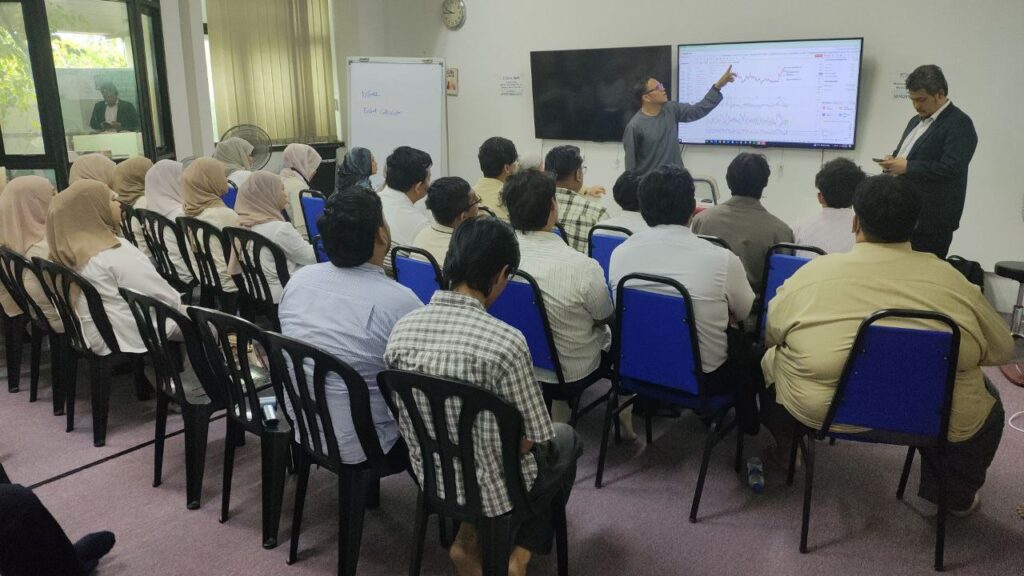
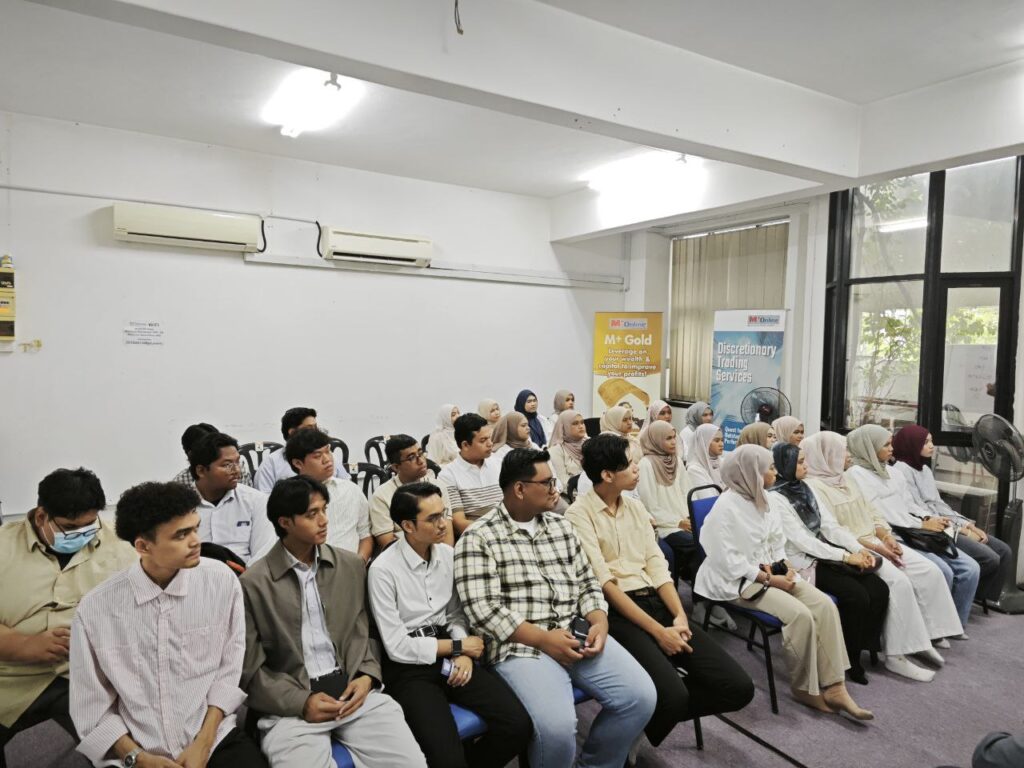
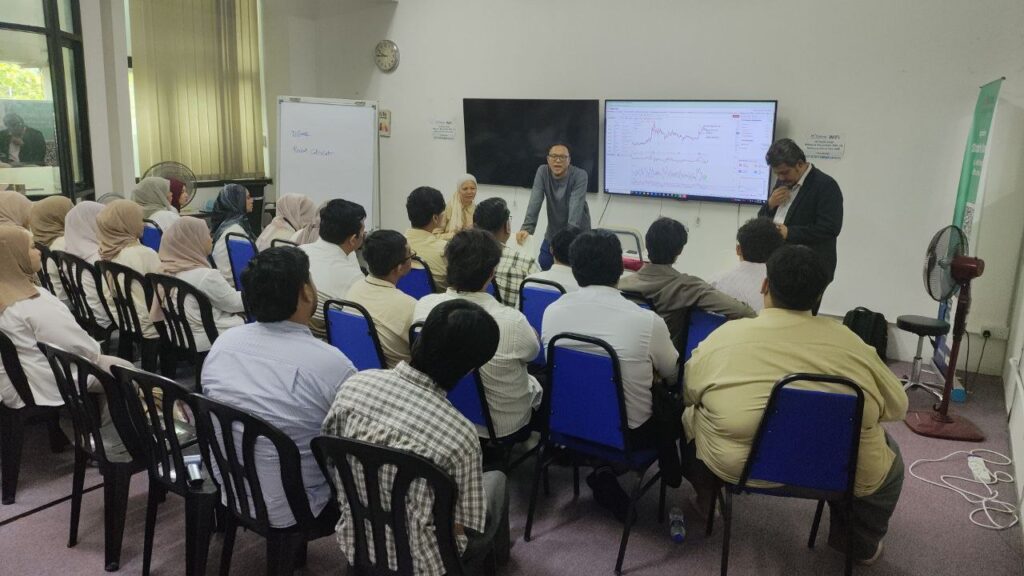
On Friday, 21 November 2025, nearly 80 enthusiastic UiTM Finance students from the Arau, Perlis campus embarked on a deeply enriching academic industry visit to the MATA Malaysia headquarters in Wangsa Maju. This exposure program, organized to bridge academic learning with real financial-market practice, offered a rare opportunity for students to witness how Technical Analysis, trading psychology, and market research operate inside the professional environment.
The UiTM delegation was led by the campus’s Deputy Rector of Student Affairs, Wan Mohd Yasser Mohd Abdoh, together with several officers supporting the student development agenda. Their arrival signaled UiTM’s continued commitment to equipping graduates with industry-savvy understanding, especially in the ever-evolving world of financial markets.
A Warm MATA Malaysia Welcome
As the group entered the MATA office, they were greeted by several key leaders of the organization. Mr. Shahrul, President of MATA, extended his warm welcome and reaffirmed the association’s dedication to supporting talent development among young Malaysian finance students. Alongside him, Mr. Farid, MATA’s Liaison Officer to IFTA (International Federation of Technical Analysts), played a crucial role in coordinating the learning modules for the day. Moreover, MATA Treasurer Mr. Hasnizam and Dr. Mohd Ruzaidi, a respected MATA subcommittee member, joined the engagement to provide professional depth throughout the session.
Their collective presence highlighted the seriousness with which MATA Malaysia treats academic-industry knowledge transfer. Although many student industrial visits tend to be surface-level, this session promised something far more substantial.
Industry Speakers with Real Market Credentials
Shortly after the introduction, the spotlight shifted to two distinguished speakers who shaped the session with their expertise and personal stories.
A UiTM Arau Perlis student takes part in a collaborative industry exposure meeting at the MATA office, gaining insights and real-world experience.
Mr. Fakhrul Asyraq: From Technical Analyst to Market Specialist
The first speaker, Mr. Fakhrul Asyraq, is both a seasoned member of MATA Malaysia and a professional Analyst at UOB Kay Hian Securities. He captivated students immediately because he brought something that textbooks often fail to deliver—practical insights from daily market battles.
Furthermore, he elaborated on how Technical Analysis influences his decision-making process when evaluating stocks, identifying market cycles, and managing trading risk. His explanation went far beyond simple chart reading. Instead, he emphasized the importance of understanding market psychology, volume behavior, and macro-micro triggers that shift investor sentiment.
Because he practices these techniques every day, his explanations felt tangible and real. Students quickly noticed how theoretical patterns translate into actionable insights when applied in real-world market movement. Additionally, he connected these skills to the demands of working in a dynamic securities firm.
Mdm Aneesah Ozleen: A Veteran Remisier With Deep Market Wisdom
The second speaker, Mdm Aneesah Ozleen, brought an equally compelling perspective. As an ex-Vice President of MATA Malaysia and a respected Remisier at Maybank Securities, she shared the human-centric side of Technical Analysis.
She discussed how clients rely on her guidance, especially when market volatility triggers emotional reactions. Moreover, she outlined the responsibilities that come with being a licensed remisier—client management, compliance requirements, financial advisory ethics, and the need to maintain long-term trust.
Her experience enriched the session, especially when she explained how Technical Analysis acts as a decision-support tool rather than a crystal ball. Because of her years of navigating market cycles, she helped students understand the importance of patience, discipline, and structured analysis.
Through her stories, many participants realized that a successful career in the financial markets requires both technical skill sets and strong emotional resilience.
Internship-Ready Insights for UiTM Finance Students
Although the students often learn Technical Analysis inside the classroom, this visit allowed them to see its true professional relevance. Since speakers used examples from actual market environments, the theories suddenly became practical tools.
How Technical Analysis Shapes Daily Workflow
Both speakers demonstrated how indicators such as moving averages, RSI, MACD, support-resistance zones, candlestick patterns, and market structure play a vital role in decision-making. Beyond that, they explained how analysts integrate:
Macro analysis to interpret global economic trends
Sector rotation strategies
Sentiment-driven signals
Volume-price confirmation
Risk-reward profiling
Portfolio exposure planning
Consequently, the students discovered that Technical Analysis is not merely a charting exercise; it is a systematic approach to decoding market behavior.
Professional Skills Future Analysts Must Master
Throughout the discussion, both speakers emphasized the importance of several industry-critical competencies:
Critical thinking and interpretation of financial signals
Clear communication, especially when explaining market outlook to clients
Time-sensitive decision-making, because markets move fast
Ethical responsibility, a crucial factor in the securities industry
Continuous learning, since markets evolve constantly
Emotional discipline, especially during market drawdowns
These insights helped students realize how university knowledge must be complemented with applied analytical ability and market awareness.
A UiTM Arau Perlis student joins a collaborative engagement session at the MATA office to explore work experience opportunities and strengthen institutional partnerships.
Behind the Scenes: What Working Life Really Looks Like
Throughout the session, the speakers also addressed questions about career progression, professional licensing, and daily work routines. Although many students expected the job to revolve around chart analysis, the speakers clarified that the reality is far more complex.
Working as an Analyst
Mr. Fakhrul described how analysts spend their day:
Interpreting economic data releases
Screening stocks using both technical and fundamental metrics
Preparing internal research reports
Participating in market briefings
Presenting insights to institutional clients
He highlighted the need to stay updated with global financial news and demonstrated how Technical Analysis helps break down volatile movements into manageable, interpretable signals.
Working as a Remisier
Meanwhile, Mdm Aneesah revealed the relationship-driven nature of a remisier’s job. She explained that while Technical Analysis guides her market perspective, her daily tasks include:
Client advising
Portfolio monitoring
Order execution
Market risk assessment
Compliance documentation
She emphasized that clients depend not only on technical accuracy but also on clear explanations and emotional support during uncertain market phases.
Because of this, she urged students to develop strong communication skills alongside their analytical knowledge.
A Deep Dive Into the Real Financial Landscape
After both speakers concluded their presentations, MATA’s leadership stepped forward to expand the discussion. They gave a broad overview of the Malaysian financial ecosystem and how Technical Analysis remains relevant despite the rise of AI, automated trading, and algorithmic models.
Even though new technologies shape today’s trading environment, the speakers stressed that human interpretation and market psychology remain essential. Technical Analysis still provides contextual clarity that automated systems often overlook.
Furthermore, the students learned about the significance of:
International Technical Analysis certifications
The role of IFTA in global market regulation
The importance of structured trading frameworks
Skill-based employability requirements in securities firms
Networking with market professionals to build industry visibility
These discussions gave students a clearer picture of how they can position themselves for careers in investment banking, brokerage firms, wealth management, and equity research.
Interactive Q&A and Real-Time Market Thinking
Although the formal session was rich, the interactive Q&A brought even more depth. Students asked sharp questions related to:
Market manipulation and how analysts detect unusual price behavior
Day trading vs swing trading from a professional standpoint
Career progression for analysts and remisiers
The role of AI in Technical Analysis
The psychological traps that new traders fall into
How to handle drawdowns without emotional bias
Both speakers responded with real examples from market events, helping students understand how seasoned professionals manage uncertainty.
Because the students were highly engaged, the atmosphere became dynamic, informative, and intellectually stimulating.
Building a Stronger Bridge Between UiTM and Industry
As the visit progressed, UiTM’s Deputy Rector expressed gratitude for the meaningful collaboration with MATA Malaysia. He emphasized the importance of exposing students to real-world skill sets, particularly as the financial job market becomes more competitive.
Moreover, he highlighted how UiTM Arau’s finance program continues to evolve by integrating practical components, industry guest lectures, and professional certification pathways. Because MATA Malaysia is a recognized leader in Technical Analysis, its involvement brings strong credibility to student development.
Meanwhile, MATA Malaysia reaffirmed its commitment to supporting educational institutions, especially those eager to strengthen financial literacy, market competency, and technical-based skills among undergraduates.
This partnership aligns with Malaysia’s broader vision to cultivate a future workforce competent in investment, capital markets, and financial technologies.
A Memorable Industry Exposure That Unlocks Future Possibilities
Toward the end of the visit, many UiTM students expressed how the session transformed their perception of Technical Analysis. While some had only experienced charts within academic textbooks, this engagement showed them the genuine power of patterns, trends, and market structure in professional decision-making.
Moreover, students felt more confident about pursuing careers in:
Equity research
Securities dealing
Investment advisory
Portfolio management
Financial data analytics
Market strategy development
Because the session was packed with real stories, industry expectations, and professional advice, the experience felt both inspiring and practical.
Why This Visit Matters for UiTM Arau’s Finance Students
Although many universities teach Technical Analysis, not all provide direct access to practitioners who use it every day. UiTM’s decision to bring students into the MATA environment shows a forward-thinking approach to education, one that blends academic theory with industry-relevant exposure.
In addition, such visits encourage students to:
Build early career networks
Gain real confidence in applying analytical tools
Understand employer expectations
Explore multiple job pathways
Strengthen their professional mindset
Because the finance industry rewards practical capability, UiTM Arau’s students now stand better prepared to step into the workforce with clarity and ambition.
A UiTM Arau Perlis student participates in a collaborative work-experience sharing session at the MATA office, fostering industry exposure and meaningful professional connections.
A Forward Path: Growing Malaysia’s Technical Analysis Talent
Before the session concluded, MATA Malaysia highlighted several initiatives designed to strengthen the country’s talent pool. They invited students to explore beginner-friendly training in Technical Analysis, portfolio strategies, and trading psychology.
Furthermore, MATA encouraged UiTM students to:
Join future workshops
Attend market outlook seminars
Participate in competitions
Complete professional certifications
Engage in mentorship programs
Such initiatives help Malaysia build a stronger, more knowledgeable group of future analysts, researchers, remisiers, and wealth consultants.
Additionally, these opportunities allow students to deepen their understanding of how markets function beyond the classroom.
Conclusion: A Significant Milestone for UiTM Arau and MATA Malaysia
The educational visit to MATA Malaysia in Wangsa Maju was far more than an ordinary academic trip. It became a transformative learning experience that blended theory, application, and professional wisdom. As UiTM students stepped out of the MATA office, many carried new confidence, clarity, and curiosity about the world of financial markets.
Although their academic journey continues, this experience laid a strong foundation for their future careers. Because Technical Analysis remains a cornerstone of modern financial decision-making, the knowledge they gained will serve them well as they prepare to enter a demanding yet rewarding industry.
Ultimately, this collaboration showcased the power of bridging academia and industry. Thanks to the dedication of UiTM’s leadership, the commitment of MATA Malaysia, and the generosity of speakers like Mr. Fakhrul Asyraq and Mdm Aneesah Ozleen, the students gained a meaningful and long-lasting learning experience.
Top 10 Likely Most Reliable Technical Indicators Used by Professional Traders
Introduction In today’s dynamic financial markets, professional traders increasingly rely on robust tools to gain an edge. Meanwhile, for Malaysian investors and analysts tuning into the Bursa Malaysia and other capital-market venues, mastering effective technical indicators can make the difference between stagnant performance and breakthrough results. Given the rising interest in “technical analysis Malaysia”, “technical indicators trading Malaysia”, and “reliable trading signals MY”, this article explores ten of the most reliable technical indicators used by professional traders, and importantly, shows how you can apply them within the Malaysian context.
By the end of this piece you will better understand which indicators earn respect from seasoned professionals, how they function, and why they matter in Malaysia’s capital-market ecosystem. Let’s dive in.
Why Reliable Technical Indicators Matter in the Malaysian Market
Before we walk through the individual indicators, it’s worthwhile to understand why reliability matters — and why local context matters. Malaysia’s trading environment features some unique structural, regulatory and behavioural traits. As a result:
Traders and investors increasingly seek tools that filter noise and emphasise signals with higher conviction.
Because of this, when you use technical indicators, you must not only know the tool, but show how it applies in a Malaysian-market context (for example, referencing the FBM KLCI or local securities) to increase trust and relevance.
With that foundation, let’s examine the top ten indicators used by professional traders — in the roughly descending order of reliability and general usage.
1. Moving Averages (Simple & Exponential)
Overview: One of the most fundamental tools in a technician’s toolbox is the moving average (MA). A simple moving average (SMA) calculates the average closing price over a defined period, while an exponential moving average (EMA) gives more weight to recent prices. Why professionals like them:
They provide a clear trend filter: price above MA tends to imply an up-trend, below implies down-trend.
They help smooth out erratic price behaviour, which is especially helpful in volatile markets like Malaysia’s mid-cap stocks.
Crossovers (such as the 50-day and 200-day) act as entry/exit signals. How to use in Malaysia: On the FBM KLCI or individual listed securities, you might track the 20-day EMA for medium-term bias and the 200-day SMA for long-term trend. For example, in a market where the index is creeping higher but the 200-day SMA remains flat, a breakout above might signal higher conviction. Caveats: Moving averages are lagging indicators. They work best in trending markets and can generate false signals in a sideways range. Always combine with other confirmation tools.
2. Relative Strength Index (RSI)
Overview: RSI is a momentum oscillator that measures the speed and change of price movements, typically over a 14-period timeframe. It oscillates between 0 and 100. Investopedia Why professionals like it:
It highlights overbought and oversold conditions—areas that may lead to reversals or corrections.
It adds a layer of momentum to trend-based tools like moving averages. How to use in Malaysia: On Malaysian stocks, you might treat an RSI above 70 as overbought (potential reversal risk) and RSI below 30 as oversold (possible bounce). However, in strong trends the RSI may stay elevated or depressed for extended periods, so it’s best used with trend filters. Caveats: RSI readings can remain extreme during strong trends, so relying solely on RSI for entries/exits without trend context may lead to premature trades.
3. Moving Average Convergence Divergence (MACD)
Overview: The MACD combines two EMAs (typically 12-period and 26-period) and a signal line (9-period). It shows the relationship between the EMAs and helps identify momentum shifts and trend changes. Investopedia Why professionals favour it:
MACD crossovers (when the MACD line crosses above/below the signal line) provide actionable signals.
The histogram shows divergence from price momentum, which may hint at impending reversals. How to use in Malaysia: For Malaysian equities or indices, you may watch for bullish MACD crossovers when price is above a key moving average (to filter for trend). A bearish crossover when price falls below the 200-day SMA might give a stronger signal to exit/short. Caveats: As with all lagging indicators, MACD may generate delayed entries in fast-moving markets. It can also be subject to whipsaws in ranging markets.
4. Average Directional Index (ADX)
Overview: Developed by Welles Wilder, ADX is designed to quantify the strength of a trend regardless of direction. The values typically range from 0 to 100; readings above 25 to 30 imply a strong trend. Investopedia Why professionals rely on it:
It helps distinguish trending conditions from range-bound markets.
It acts as a filter: if ADX is low, then trend-based signals from other indicators (like moving averages or MACD) may be weaker. How to use in Malaysia: You might combine ADX with price and moving average context. For example, only consider moving-average or MACD signals when ADX is above 30 (implying strong trend). If ADX is below 20, then you may prefer oscillators like RSI or Stochastic that work better in ranges. Caveats: ADX does not give direction—it just signals strength of trend. Also, as a lagging measure, it may only confirm a trend after it has already begun.
5. Bollinger Bands
Overview: Bollinger Bands consist of a moving average (usually 20-period) plus two standard-deviation lines above and below. They expand and contract with volatility. Why professionals like them:
They visualise volatility: contracting bands may signal calm before expansion; wide bands can signal over-extension.
Price touching or penetrating the bands may provide entry/exit cues (especially when combined with momentum). How to use in Malaysia: In the Malaysian markets, you might look for price moving towards the lower band after a trending move as a possible mean-reversion trade, or for price breaking above the upper band with strong volume as a breakout signal. Caveats: In a strong trend, price may “ride” the upper band for extended time, so using Bollinger Bands alone may mislead. Confirm with trend or momentum indicators.
6. Stochastic Oscillator
Overview: The Stochastic Oscillator compares a security’s closing price to its price range over a specific period. It oscillates between 0 and 100 and is often used to identify overbought/oversold levels (e.g., above 80/20). Why professionals find it useful:
It emphasises momentum and turning points, especially in shorter-term trades.
Divergences between price and the oscillator can hint at potential reversals. How to use in Malaysia: On shorter-term charts for Malaysian stocks, you might use Stochastic when price is near support/resistance. A crossing of the %K line above the %D line from below 20 might be an early buy signal. However, ensure the broader trend supports the trade. Caveats: The Stochastic can generate many false signals in strong trends. It works best as a secondary confirmation tool rather than a primary signal generator.
7. Commodity Channel Index (CCI)
Overview: The CCI measures a security’s price deviation from its statistical mean (typically a 20-period average). Values above +100 indicate overbought; values below –100 indicate oversold. Why professionals incorporate it:
It can highlight price deviations from the norm — useful for mean-reversion trades.
It can identify new trends when CCI moves from below –100 to above +100. How to use in Malaysia: For Malaysian mid-cap stocks that often swing, the CCI may help identify reversal zones. For instance, when the CCI dips below –100 on low price but then crosses above –100 with volume expansion, it could signal early trend change. Caveats: Like other oscillators, CCI may underperform in strong trending markets. It’s best when used in combination with a trend strength filter (e.g., ADX).
8. Parabolic SAR (Stop and Reverse)
Overview: The Parabolic SAR plots dots either above or below price bars. When the dots switch from above to below price (or vice versa), it signals a potential trend reversal. Investopedia Why professionals value it:
It provides a trailing stop-loss mechanism and dynamic potential entry/exit signals.
It works especially well in trending markets. How to use in Malaysia: For a trading setup on Malaysian stocks or index futures, you might set a Parabolic SAR trailing stop once a trend is identified. If the price closes below the dot in an uptrend, you may exit. Conversely, when the dot appears below price after a downtrend, you might go long. Caveats: The Parabolic SAR can whip around in sideways or choppy conditions, producing frequent false signals. It is less reliable when market structure is unclear.
9. Ichimoku Cloud (Ichimoku Kinko Hyo)
Overview: The Ichimoku Cloud is a multi-component indicator including the Tenkan-Sen, Kijun-Sen, Senkou Span A & B (which form the “cloud”), and the Chikou Span (lagging line). It offers trend, support/resistance, and momentum in one view. Why professionals like it:
It provides a comprehensive framework in one glance — trend direction, strength, momentum and support/resistance.
It works across multiple timeframes, making it suited for intermediate and long-term analysis. How to use in Malaysia: On Malaysian equities or indices, you might use the Ichimoku Cloud to define major trend direction (price above cloud = bullish; below = bearish). Then combine a pullback to the Kijun-Sen or Senkou Span A as a potential entry point when the Chikou Span also confirms. Caveats: The Ichimoku Cloud has many elements and may look complicated; traders must internalise its logic rather than mechanically apply signals. Also, in very volatile markets its signals may lag.
10. Volume Weighted Average Price (VWAP) & Volume-Based Indicators
Overview: Although technically not a “classic” chart indicator like an oscillator, VWAP and other volume-based tools (volume spikes, volume by price) are increasingly regarded as reliable by professional traders. They integrate price action with volume – a key confirmation factor. Why professionals emphasise it:
Volume is the fuel behind price moves; thus price moves on heavy volume tend to matter more.
VWAP provides a weighted average price by volume for the day (or session), and price above/below VWAP can signal institutional interest or sentiment. How to use in Malaysia: In intraday trading of Malaysian stocks or futures, you may use VWAP as a reference: price staying above VWAP may signal institutional buying, while price falling below might imply distribution. Combining this with breakout/wide-range bars can increase reliability. Caveats: Volume data in some Malaysian stocks may not always reflect institutional behaviour due to liquidity issues. Traders must ensure that the stock or asset has sufficient volume before relying on volume-based signals.
Putting It All Together: A Practical Framework for Malaysian Traders
Having reviewed the ten indicators, here is a suggested framework you can apply in the Malaysian trading environment:
Define the Trend – Use Moving Averages and/or Ichimoku Cloud to identify whether the market or stock is in Uptrend, Downtrend or Range.
Measure Trend Strength – Apply ADX (or similar) to assess whether the trend is sufficiently strong to trade. If ADX is low, favour oscillators or range strategies instead.
Monitor Momentum/Over-extension – Use RSI, Stochastic, CCI, MACD to spot entry/exit points within the trend context. Watch for divergences or oversold/overbought setups.
Volatility & Volume Filter – Use Bollinger Bands, VWAP and volume spikes to determine whether price action has strength (breakouts) or is likely to mean-revert.
Refine Entry & Risk-Management – Use Parabolic SAR (or trailing stops) to manage stop-losses and exits, particularly once in a trade.
Maintain Discipline – No single indicator delivers perfect signals. The real edge comes when you combine these tools, tailor to local market dynamics, and apply strict risk-management.
In the Malaysian context, also remember: liquidity conditions, local corporate events, and regulatory announcements can influence market behaviour. These indicators should complement—never replace—your awareness of fundamentals and market structure.
Local SEO & Keyword Integration for Malaysia
Since you are publishing on MATA Malaysia’s site, here are some tips to ensure the article ranks well:
Include keywords such as “technical indicators Malaysia”, “best technical indicators trading Malaysia”, “reliable trading signals Bursa Malaysia”, and “technical analysis Malaysia stock market”.
Use long-tail versions: e.g., “how to use MACD indicator in Malaysia market”, “ADX trend strength indicator for Malaysian stocks”, “VWAP intraday strategy Malaysia”.
Use a mix of English and Bahasa Malaysia keywords or hybrid queries (e.g., “indikator teknikal Malaysia”, “analisis teknik Bursa Malaysia”). Malaysia’s SEO environment also favours mixed language content.
Ensure your article is mobile-friendly, has proper header structure (H1 for title, H2/H3 for sections), alt-text for any images, and includes internal links (e.g., to other related MATA Malaysia content) and external authoritative links (e.g., to Investopedia definitions).
Offer local examples: mention how these indicators apply on the FBM KLCI (or other Malaysian indexes/blue-chip stocks) to increase specificity and relevance.
Keep content length high (you are targeting ~2,400–2,700 words) which aligns with Malaysian SEO trends favouring long-form expert content.
Final Thoughts
In summary, while there is no “holy-grail” indicator that works in all markets all the time, the ten indicators identified above offer high-utility frameworks for professional traders. They generate signals, filter noise, and provide structure. Importantly, when applied within the Malaysian market with proper risk-management and market‐awareness, they help build a disciplined trading approach.
By leveraging Moving Averages, RSI, MACD, ADX, Bollinger Bands, Stochastic, CCI, Parabolic SAR, Ichimoku Cloud, and VWAP/volume tools — and by combining them intelligently — Malaysian traders can elevate their technical-analysis game.
Remember: indicators reveal what’s happening, but smart traders interpret why it’s happening. Use these tools not as magic bullets, but as reliable guide-posts.
Good luck with your trading and content strategy on MATA Malaysia. If you’d like deeper drill-downs on any one of the indicators, or sample Malaysian-market case studies, feel free to ask!
🧠 What Is Technical Analysis? A Beginner’s Guide for Malaysian Traders in 2026
In 2026, Malaysia’s financial landscape is more dynamic than ever. From a bustling equities market on Bursa Malaysia to an expanding interest in cryptocurrencies, commodities, and derivatives, traders across the nation are seeking smarter, faster ways to understand and predict price movement.
One method stands out across generations and asset classes: technical analysis.
But what exactly is technical analysis, and how can Malaysian traders master it for consistent profitability?
Let’s break it down with precision, clarity, and strategy — so whether you’re just beginning or refining your edge, you’ll walk away with real insights you can use.
🔍 Understanding Technical Analysis: The Foundation
Technical analysis is the study of price movements using historical market data, primarily through charts. Unlike fundamental analysis, which focuses on a company’s earnings, news, or macroeconomics, technical analysis assumes that all relevant information is already reflected in the price.
Core Principle: Price Discounts Everything
This idea suggests that markets are efficient in reflecting all information — including public news, expectations, interest rates, and sentiment. Therefore, instead of predicting the “why,” technical analysts focus on the “what” — price and volume behavior.
Malaysia’s Embrace of Technical Analysis
In recent years, technical analysis in Malaysia has matured. From proprietary trading firms to home-based retail traders, thousands are applying technical methods daily. Tools like Security Commision’s approved trading platforms make access easier than ever. Moreover, MATA continues to play a pivotal role in training, certifying, and promoting the growth of competent technical analysts.
📈 Why Technical Analysis Matters for Malaysian Traders
Malaysia’s markets are liquid but often news-driven, reacting sharply to corporate announcements, political shifts, and global economic cues. In such an environment, technical analysis offers structure and clarity where noise dominates.
Here’s why it works:
Chart patterns repeat due to mass psychology.
Indicators provide entry/exit signals aligned with real-time data.
Support and resistance levels reveal hidden market dynamics.
Volume trends confirm or reject price action.
These tools don’t just work in isolation. When combined, they form robust trading strategies suitable for Bursa stocks, Malaysian’s Commodities, Indices, Foreign Exchange pairs, and even Cryptocurrencies.
🧩 Key Concepts in Technical Analysis (With Malaysian Examples)
Let’s explore the building blocks of technical analysis with examples relevant to Malaysia’s financial markets.
1. Trend Analysis: Follow the Flow
Traders often say, “The trend is your friend.” That’s because a well-identified trend can significantly increase the odds of a successful trade.
Uptrend: Series of higher highs and higher lows.
Downtrend: Lower highs and lower lows.
Sideways: Price consolidates within a range.
📌 Example: The KLCI Index during the COVID-19 recovery phase (2020–2022) showed an extended sideways range between 1,470–1,610. Recognizing this saved many from false breakouts.
2. Support and Resistance: Market’s Invisible Barriers
Support and resistance levels mark zones where price reversals are likely. Traders use them to plan entries and exits with precision.
Support: Price floor where demand tends to overcome supply.
Resistance: Price ceiling where supply outweighs demand.
📌 Example:Top Glove (7113) often rebounded from RM0.75 support level in early 2023. Traders who spotted this repeated behavior benefited from short-term scalps.
3. Candlestick Patterns: Language of the Charts
Candlesticks display four key data points: Open, High, Low, and Close (OHLC). They offer powerful visual cues on sentiment shifts.
Some key patterns include:
Hammer: Bullish reversal
Shooting Star: Bearish reversal
Engulfing: Momentum confirmation
Doji: Indecision or potential reversal
📌 Example: In February 2024, Inari Amvertron (0166) formed a bullish engulfing pattern at a key Fibonacci level, followed by a 12% rally.
4. Chart Patterns: The Psychology of Repetition
Chart patterns represent crowd behavior and market psychology. Recognizing them helps traders forecast breakouts or breakdowns.
Head and Shoulders (reversal)
Double Top / Bottom (reversal)
Cup and Handle (bullish continuation)
Triangles (breakout formations)
📌 Example: The FBM Small Cap Index showed a symmetrical triangle breakout in August 2025, leading to a sustained rally.
5. Technical Indicators: Quantifying Price Action
Indicators are mathematical tools based on price, volume, or both. They help filter noise and increase probability.
Popular choices in trading strategies include:
Moving Averages (SMA/EMA): Identify trend direction
Relative Strength Index (RSI): Measure overbought/oversold levels
MACD: Capture momentum and crossovers
Bollinger Bands: Gauge volatility
📌 Tip: Combine indicators, but avoid cluttering your charts. A clean setup enhances decision-making.
⚙️ How to Build a Simple Trading Strategy (Step by Step) with example.
Every Malaysian trader should develop a strategy that suits their risk profile, time commitment, and capital size. Here’s a sample technical approach:
🎯 Example Strategy : RSI + Support + Candlestick Confirmation
Market: Bursa Malaysia large caps Setup:
Identify a support level on the daily chart.
Wait for price to touch support and RSI to drop below 30.
Confirm with a bullish candlestick pattern (e.g., hammer or engulfing).
Enter the trade, place stop-loss below support, set target at next resistance.
📌 Example: In Q1 2025, Petronas Chemicals (5183) offered this setup and rallied 9% in two weeks.
🔒 Risk Management: Your First Priority
Even the best trading strategies can fail without solid risk control. Never risk more than 1–2% of your capital per trade. Use:
Stop-loss orders
Risk-reward ratios (Aim for at least 2:1, ideal 3:1 to 5:1)
Position sizing calculators
Without risk management, emotions will rule your trading decisions, leading to overtrading or holding onto losing positions.
🧠 Trading Psychology: Mastering the Mental Game
Markets are as much emotional as they are logical. Fear, greed, hope, and regret influence decisions more than we admit.
To stay grounded:
Stick to your trading plan
Keep a trading journal
Avoid revenge trading after losses
Celebrate discipline, not profits
The Malaysian retail trader community is growing rapidly. Many start with passion but fall due to emotional missteps. Staying disciplined separates amateurs from professionals.
💼 Tools Every Malaysian Technical Analyst Should Use
In 2026, software tools and platforms make analysis faster and smarter. Here are must-haves:
✔️ Charting Platfom
Different trading platform provided by local approved brokers give you slight different information and give you bigger advantage. Try different charts in different trading platform and find yourself the one suit the most.
✔️ Bursa Marketplace
Provides research tools, stock screeners, and fundamental/technical filters.
✔️ MATA Resources
If you’re a member of the Malaysian Association of Technical Analysts, use the exclusive resources available — including webinars, certified training, and chart reviews.
🏁 Final Thoughts: Why Technical Analysis Is a Must for Malaysian Traders in 2026
In a year defined by AI-driven markets, real-time data, and volatile price swings, having a structured, technically sound approach is non-negotiable.
Technical analysis empowers Malaysian traders to read the language of price, decode emotions behind candles, and respond with precision — not guesswork.
By mastering chart patterns, refining trading strategies, and understanding the psychology behind every move, you don’t just follow the market — you anticipate it.
📚 Frequently Asked Questions (FAQ)
To wrap up this in-depth beginner’s guide, let’s answer some of the most common questions about technical analysis in Malaysia:
❓ Is technical analysis reliable in the Malaysian stock market?
Yes — when used correctly. Technical analysis in Malaysia works especially well for liquid counters on Bursa Malaysia and popular commodities and derivatives. However, no strategy offers 100% accuracy. The key lies in combining technical setups with strong risk management and consistent trading discipline.
❓ Can I use technical analysis for cryptocurrencies and forex in Malaysia?
Absolutely. Many Malaysian traders apply the same chart patterns, indicators, and strategies across asset classes, including Bitcoin, Ethereum, and major forex pairs. Just be mindful of the volatility and 24/7 nature of these markets, especially when trading from Malaysian time zones.
❓ How long does it take to master technical analysis?
It depends on your learning curve and practice frequency. With focused study and active chart analysis, most traders develop a solid foundation within 6–12 months. That said, even seasoned professionals continuously refine their edge. Joining communities like MATA accelerates learning significantly.
❓ Do Malaysian regulators recognize technical analysis?
Yes. While technical analysis is not regulated per se, it is widely practiced and acknowledged as a professional skill. Brokers, fund managers, and proprietary trading firms in Malaysia often employ or train analysts in technical methodologies. MATA also offers certified pathways to build credibility and industry recognition.
❓ What’s the first step I should take as a beginner?
Start with the basics:
Learn to read candlestick charts
Understand support and resistance
Pick one or two indicators (like RSI or MACD)
Backtest on historical charts
Keep a trading journal
Then, consider enrolling in MATA’s foundational workshops or technical analysis courses to speed up your progress.
🚀 Where Do You Go from Here?
Technical analysis isn’t just a tool — it’s a lens through which you see the market clearly. With consistent effort, structured learning, and community support, any Malaysian trader can master the charts.
By learning the language of price, spotting patterns, and applying tested strategies, you’ll move from being reactive to proactively navigating market trends.
Whether you’re trading stocks on Bursa Malaysia, speculating in gold or oil, or diving into crypto charts — technical analysis gives you the edge needed in 2026 and beyond.
📣 Ready to Elevate Your Trading Journey?
👉 Join Malaysian Association of Technical Analysts (MATA) today to: